
At Daan Foundation, Amroha, we believe feeding the poor through zakat, sadqah, and iftaar is the best form of charity in Islam — and one question we hear from donors more than almost any other is simple: once I’ve made my iftar donation, where does it actually go?
An iftar donation to Daan Foundation is used to prepare and deliver a complete Iftar meal to a fasting family in need, at a cost of ₹90 per person, with every rupee tracked from payment to the plate it reaches. That single figure — ₹90 — covers ingredients, cooking, and distribution for one person’s Iftar, making the journey from your donation to a real meal easy to follow.
This article walks through that journey step by step, so an iftar donation stops feeling like an abstract transaction and starts feeling like what it actually is: a specific meal, for a specific family, on a specific evening during Ramadan.
What ₹90 Actually Buys
Every iftar donation is costed around a single unit: ₹90 feeds one person a complete Iftar meal — dates to break the fast, a proper hot meal, and water. This isn’t a rounded estimate; it’s the real per-person cost of ingredients and preparation at Daan Foundation’s Amroha kitchen during Ramadan.
When you donate for iftar, your contribution is pooled with others’ and converted directly into meal count. A ₹900 iftar donation, for instance, funds ten complete Iftar meals — not a vague “contribution,” but ten trays that leave the kitchen and reach ten people.
This is different from Sadaqah given generally, or from the year-round Community Kitchen program, which runs on a separate ₹59-per-meal figure for daily (non-Ramadan) food distribution. Iftar donations are seasonal, tied specifically to Ramadan, and costed at ₹90 because Iftar meals are typically richer and more complete than a standard daily meal.
Why This Matters in Islam
Feeding a fasting person to break their fast carries a distinct weight in Islamic tradition, separate from charity given at other times of year. It’s an act tied directly to the discipline of the fast itself — supporting someone else’s ability to complete their day of worship with dignity, not just addressing hunger in general.
For many donors, an iftar donation also fulfills a specific religious intention: some give it as Sadaqah, others direct their Fidyah or Kaffarah obligations toward funding Iftar meals, since feeding the needy is the core requirement in both cases. Whichever the intention, the underlying principle is the same — feeding someone at the moment they most need it.
This is also why donors ask where the money goes so often. When charity is tied to a specific religious act, knowing it actually reached someone matters more, not less — a vague “we’ll use it well” answer isn’t good enough when the giving itself was this deliberate.
There’s also a communal dimension worth naming: Iftar has traditionally been a shared, gathering-based meal, not a solitary one. Funding an Iftar distribution isn’t just feeding one person in isolation — it’s supporting the moment a family, or a group of strangers at a community Iftar, breaks the fast together.
How Daan Foundation Handles Your Iftar Donation
Here’s the actual process, from your donation to a plate reaching someone:
- Your iftar donation is received and logged against the day’s Ramadan Iftar fund, converted into a meal count using the ₹90-per-person figure.
- Daan Foundation’s Amroha kitchen sources ingredients and prepares Iftar meals fresh each day — nothing is pre-packaged or stored for later.
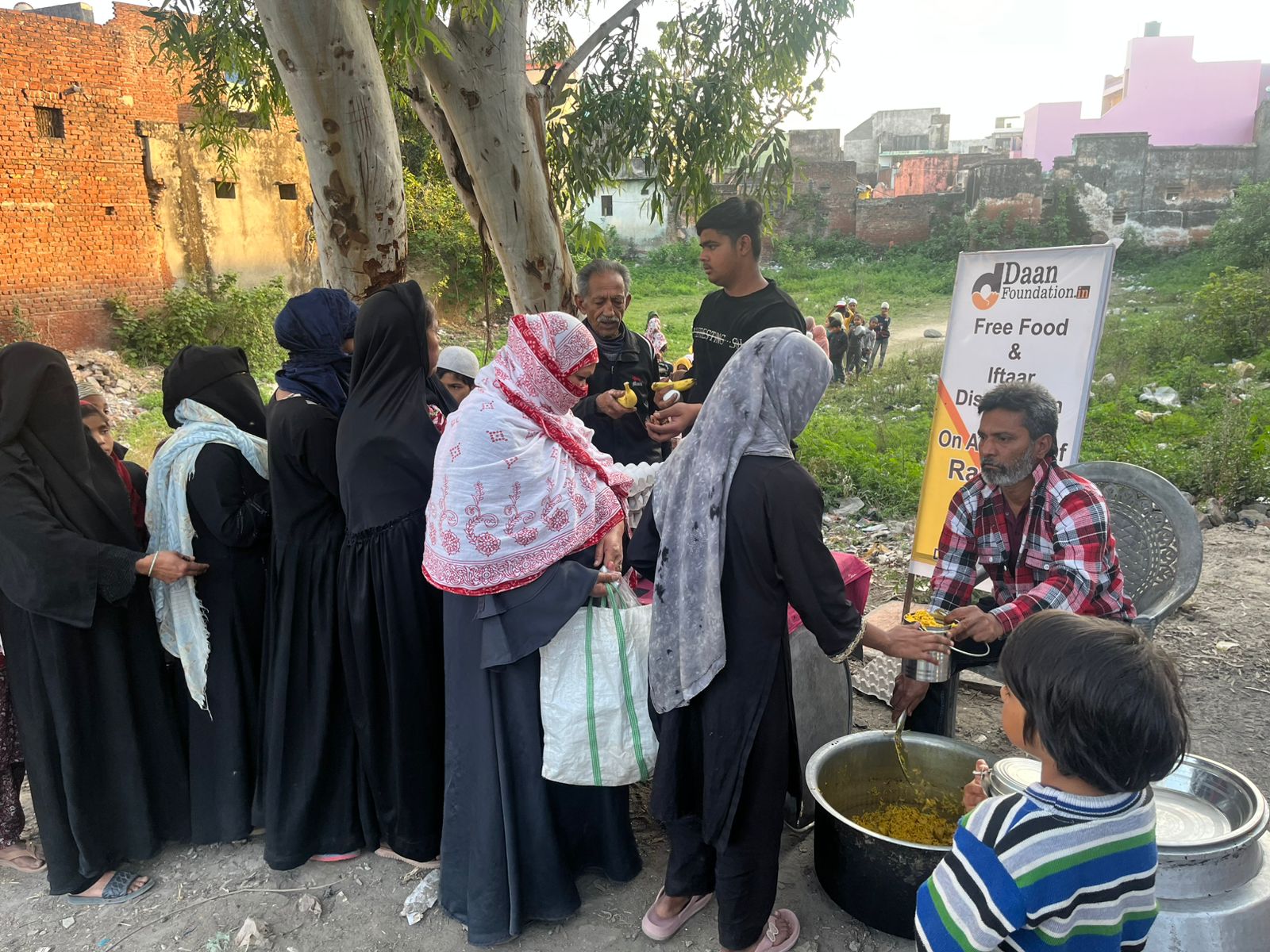
- Meals are packed and distributed at Iftar time to families and individuals in and around Amroha, timed so the fast is broken with a warm meal, not a cold one.
- During Ramadan, this same model has occasionally extended to pilot Iftar stalls in other cities, run the same way — fresh meals, distributed at the moment of breaking the fast.
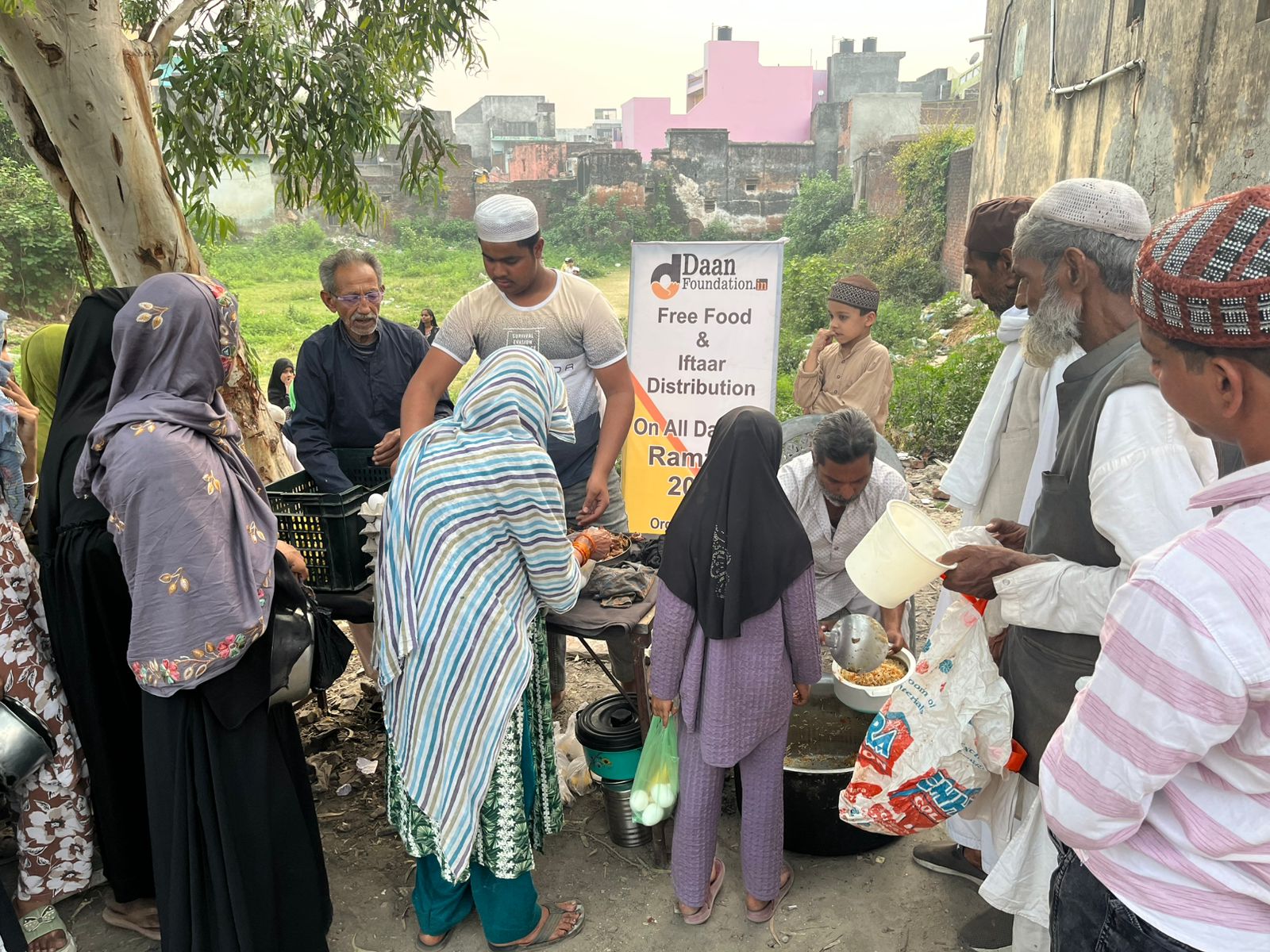
Nothing sits in a warehouse and nothing is “banked” for a future date. An iftar donation made today is meant to become a meal within days, during the Ramadan window it was given for. If you’d like to support this directly, you can make your iftar donation online in a few minutes.
Where This Reaches — Amroha and Beyond
Daan Foundation is physically based in Amroha, Uttar Pradesh, where the Community Kitchen and Ramadan Iftar distribution both operate from a fixed base, not a shifting or unverifiable location. This is where the majority of every iftar donation is put to use, year after year.
Beyond Amroha, Daan Foundation has run time-to-time Ramadan pilot projects — Iftar stalls set up temporarily in other parts of India during the holy month — rather than maintaining permanent branches elsewhere. Donors from Kerala, Bengaluru, and Maharashtra have supported these pilot efforts, trusting that a donation routed through an established Amroha-based NGO is easier to verify than an informal local collection.
If a pilot Iftar stall isn’t currently active in your city, your iftar donation still directly funds the Amroha kitchen’s daily Ramadan distribution — it doesn’t go unused. There’s no separate “regional fund” that sits idle; every iftar donation flows into the same tracked Ramadan Iftar pool regardless of where the donor is writing in from.
Frequently Asked Questions
Where does my iftar donation actually go?
It funds a specific Iftar meal — dates, a hot meal, and water — prepared fresh at Daan Foundation’s Amroha kitchen and distributed the same day to a fasting individual or family, costed at ₹90 per person.
How much does one Iftar meal cost through Daan Foundation?
₹90 per person. This figure is specific to Iftar meals during Ramadan and is different from the ₹59 figure used for the year-round Community Kitchen program.
Can I donate bank interest toward Iftar meals?
Yes — many donors direct disallowed bank interest toward feeding the needy rather than keeping it, and Iftar distribution is a valid use for it, since the funds go directly to feeding people in need.
Kya mera iftar donation sirf Amroha mein use hota hai ya doosre shehron mein bhi?
Zyadatar Amroha mein hi, jahan roz ka kitchen chalta hai — lekin Ramadan ke dauran kabhi-kabhi doosre shehron mein bhi pilot Iftar stalls lagte hain, agar us waqt active ho.
Is Iftar donation the same as Zakat?
Not automatically — Zakat has specific eligibility rules for both giver and recipient. Many donors give Iftar donations as Sadaqah instead, which has no such restrictions and can be given by anyone, to fund a meal for anyone in need.
A Donation You Can Actually Trace
An iftar donation doesn’t have to stay abstract. At ₹90 per person, it’s specific enough to picture: one meal, one family, one evening of breaking the fast with dignity instead of hunger.
Daan Foundation, based in Amroha and reaching further during Ramadan through pilot Iftar stalls, exists to make that connection as direct as possible. If you’re ready, you can make your iftar donation online today — and know exactly what it becomes.