
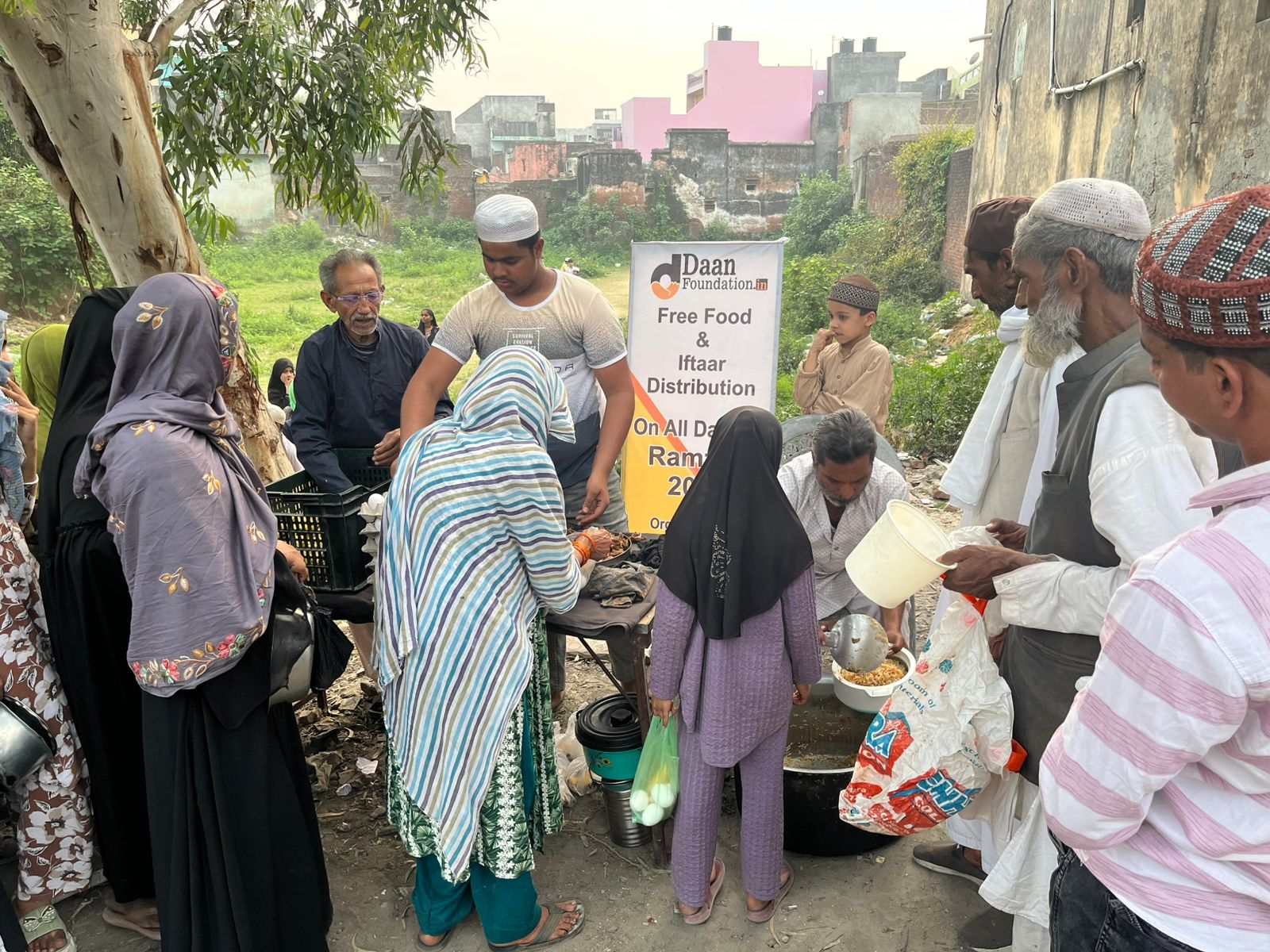
At Daan Foundation, Amroha, we believe feeding the poor through zakat, sadqah, and iftaar is the best form of charity in Islam — and this belief is exactly why so many donors write to us each Ramadan asking how to pay kaffara online after missing a fast.
Kaffara for a missed Ramadan fast is the compensation owed when an adult Muslim deliberately breaks a fast without a valid Islamic excuse — the widely followed ruling requires feeding 60 poor people two meals a day, or fasting 60 consecutive days if feeding isn’t possible, and it can be fulfilled today by donating online to an Islamic charity that feeds the poor on your behalf.
If you’re trying to understand what kaffara actually means, how it’s different from fidyah, and how Daan Foundation turns your online kaffara donation into real meals for hungry families in India, this guide walks through it simply — no confusing fiqh jargon, just what a donor genuinely needs to know.
What Is Kaffara for a Missed Fast?
Kaffara (literally “expiation” or “atonement”) is the penalty prescribed in Islam when someone deliberately breaks their Ramadan fast without a genuine excuse like illness, travel, or pregnancy. It is different from a fast simply missed due to a valid reason — that only requires making up (qaza) the fast later, not kaffara.
The kaffara for a broken fast is more serious than the kaffara for breaking an oath because fasting during Ramadan is a direct religious obligation. According to Islamic scholars, the order of options is:
- Free a slave (not applicable in the modern world).
- Fast 60 consecutive days without a break.
- If unable to fast continuously, feed 60 poor and needy people two full meals each, or give the equivalent value in food/money to a charity that can distribute it on your behalf.
For most donors today — especially those living outside India or in cities without direct access to families in need — the third option, feeding 60 people through a trusted islamic charity ngo, is the most practical way to pay kaffara online.
Kaffara vs Fidyah: Don’t Confuse the Two
Many donors search for “kaffara” when they actually mean fidyah, and the two get mixed up constantly. Fidyah applies when someone has a valid, often permanent or long-term reason for not fasting — such as old age or chronic illness — and it typically involves feeding one person per missed fasting day, not 60 people at once.
Kaffara, on the other hand, is specifically the atonement for deliberately and without excuse breaking a fast you had already started. Getting this distinction right matters, because the amount and intention behind the donation genuinely differ. If your situation involves an ongoing illness rather than a one-time broken fast, see our fidyah donation page instead — it covers that separately.
Why This Matters in Islam
Fasting is one of the five pillars of Islam, and Ramadan’s obligation is treated with a seriousness that reflects its spiritual weight. Kaffara isn’t meant as a punishment in the everyday sense — it’s a mercy built into the religion, a way to make things right when a fast is broken, while directly benefiting the poorest members of the community.
This is part of what makes Islamic charity so practical: the same act that atones for a broken fast also puts real food on a hungry family’s table. There’s no gap between spiritual obligation and social good — they’re designed to work together.
How Daan Foundation Helps You Pay Kaffara Online
Daan Foundation is a charitable trust based in Amroha, Uttar Pradesh, and our community kitchen model exists precisely for donations like this. When you send your kaffara donation to us, it goes directly toward preparing and distributing real meals — not administrative overhead — to families who genuinely need them.
Through our community kitchen, a full day’s meal for one person costs approximately ₹59 — so a kaffara obligation of feeding 60 people works out to a clear, calculable amount you can donate online in a single transaction, with the confidence that it reaches an actual plate of food rather than sitting in a fund.
You don’t need to personally locate 60 families, cook 60 meals, or manage the logistics. Simply donate your kaffara through our Kaffara giving page, mention it’s a kaffara payment, and we handle the distribution through our existing, on-the-ground network in Amroha.
Where Daan Foundation’s Kaffara Reach Extends
Our core community kitchen and daily food distribution work is based permanently in Amroha, Uttar Pradesh, where our team knows the families we serve. Beyond Amroha, during Ramadan specifically, we also run time-to-time pilot Iftar stalls in different parts of India — so donors from Kerala, Maharashtra, West Bengal, Gujarat, and other states have written in wanting to support both our Amroha base and these seasonal Ramadan efforts.
If you’re an NGO in Uttar Pradesh looking for a partner, or simply a donor anywhere in India wanting your kaffara to reach zakat-eligible, genuinely hungry families, Daan Foundation’s Amroha-rooted model is built for exactly this.
Frequently Asked Questions
How can I pay kaffara online in India?
You can donate the equivalent value of feeding 60 people directly through Daan Foundation’s donation page, mentioning it’s a kaffara payment — we distribute it as real meals through our Amroha community kitchen.
What is kaffara in Islam for a missed fast?
It’s the compensation required for deliberately breaking a Ramadan fast without a valid excuse — typically feeding 60 poor people or fasting 60 consecutive days if feeding isn’t possible.
Is kaffara the same as fidyah?
No. Fidyah is for people with a valid long-term reason for not fasting (like chronic illness), usually one meal per missed day. Kaffara is for deliberately breaking a fast without excuse, and is a larger obligation — typically feeding 60 people.
Kya main kaffara ek hi baar mein online de sakta hoon?
Haan, aap poori kaffara amount ek hi baar mein Daan Foundation ko donate kar sakte hain, aur hum ise 60 logon tak meals ke roop mein pahuncha dete hain — aapko khud logon dhundhne ki zaroorat nahi.
Where does my kaffara donation actually go?
It goes directly into Daan Foundation’s community kitchen operations in Amroha — real ingredients, real cooking, and real meals served to families in need, with no funds diverted elsewhere.
Give Your Kaffara With Confidence
Paying kaffara online doesn’t need to be complicated or uncertain about where the money ends up. When you donate through Daan Foundation, your kaffara for a missed fast becomes an actual meal, served with dignity, to a family that needed it — rooted in our Amroha community kitchen and extended, during Ramadan, to families across India through our pilot Iftar efforts.
If you’d like help calculating your exact kaffara amount or have questions before donating, reach out to us at daanfoundationindia@gmail.com — we’re glad to guide you through it.